
Moving out of state is a big deal. It is more complicated than a local move because distance adds logistics, cost, and timing challenges. Even small mistakes can cause delays, extra fees, or stress.
The key is planning ahead and breaking the move into clear steps. This guide walks you through the process from start to finish so you can stay organized and avoid common pitfalls.
Step 1: Plan early
Start planning as soon as possible. Ideally, give yourself at least six to eight weeks, but even a shorter timeline can work with focused effort. Planning early helps you:
- Compare moving companies and storage options.
- Declutter items you don’t need.
- Gather packing materials.
- Schedule time off work or coordinate help.
The more time you give yourself, the less likely you are to make rushed decisions that cost money or create headaches.
Step 2: Budget and research moving costs
Out-of-state moves are usually charged by weight or volume, plus distance. Costs can vary widely depending on your items, travel route, and whether you hire movers or rent a truck.
Research and compare quotes from multiple companies. Don’t just pick the cheapest. Look at reviews, licensing, insurance coverage, and the services included. Consider storage costs if you need temporary space during the transition.
Step 3: Declutter and organize
The less you move, the cheaper and easier the move will be. Go through your home and sort items into:
- Keep and ship immediately.
- Store for later.
- Donate, sell, or recycle.
This process reduces clutter, saves on shipping weight, and makes unpacking at your new home much simpler. If you plan to use storage, label items clearly and note what goes into storage versus what goes to the new house.
Step 4: Choose a moving method
You have several options for an out-of-state move:
- Full-service movers – They pack, load, transport, and unload everything. Expensive but convenient.
- Moving containers – You load a portable container yourself, and the company ships it. Flexible and often cheaper than full-service movers.
- Truck rental – You do everything yourself. Cheapest but requires physical effort and time.
Each option has pros and cons. Your choice depends on your budget, time, and how much help you have.
Step 5: Pack strategically
Packing well prevents damage and makes unpacking faster. Tips for out-of-state moves:
- Pack heavier items in small boxes and lighter items in larger boxes.
- Wrap fragile items carefully with paper, bubble wrap, or blankets.
- Label boxes with room and contents.
- Keep a “first day essentials” box with clothes, toiletries, chargers, and important documents.
- Separate items for storage versus immediate unpacking.
Packing bags can be used for soft goods like linens and pillows, but boxes are better for fragile or heavy items.
Step 6: Handle important documents
Keep essential documents with you. These include:
- Passports, birth certificates, and social security cards.
- Financial documents and insurance policies.
- Medical records and prescriptions.
- Car registration and insurance.
Do not put these in the moving truck or storage. Keep them in a personal bag or folder that travels with you.
Step 7: Notify utilities, services, and address changes
Before you leave, schedule service stops and starts:
- Cancel or transfer utilities, internet, and cable.
- Update your address with USPS, banks, and credit cards.
- Notify insurance companies, schools, and employers.
Doing this early ensures your mail, services, and billing follow you to your new state without interruption.
Step 8: Plan the route and travel logistics
If you are driving, plan your route, stops, lodging, and meals. Consider weather, traffic, and vehicle limitations if towing a car or trailer.
If flying, coordinate the pickup of belongings from movers or storage in the new state. Timing is key to avoiding long storage waits or missed deliveries.
Step 9: Prepare for storage if needed
Out-of-state moves often require temporary storage. Storage can help if your new home is not ready or if items arrive at different times.
Tips for storage:
- Label boxes clearly.
- Choose a climate-controlled unit for sensitive items.
- Keep valuables separate.
- Make a list of what goes into storage and its contents.
Storage helps reduce clutter at the new house and keeps items safe until you are ready to unpack.
Step 10: Moving day
On moving day:
- Confirm the movers’ arrival time.
- Walk through your home to point out fragile or special items.
- Keep your essentials box and valuables with you.
- Check the truck before it leaves to ensure nothing is left behind.
Being organized reduces stress and avoids last-minute problems.
Step 11: Unpacking and settling in
Once you arrive:
- Place boxes in the labeled rooms.
- Unpack essentials first.
- Set up utilities and services immediately.
- Schedule storage retrieval if necessary.
Take your time unpacking non-essential items. A planned, gradual approach keeps your new home organized from the start.
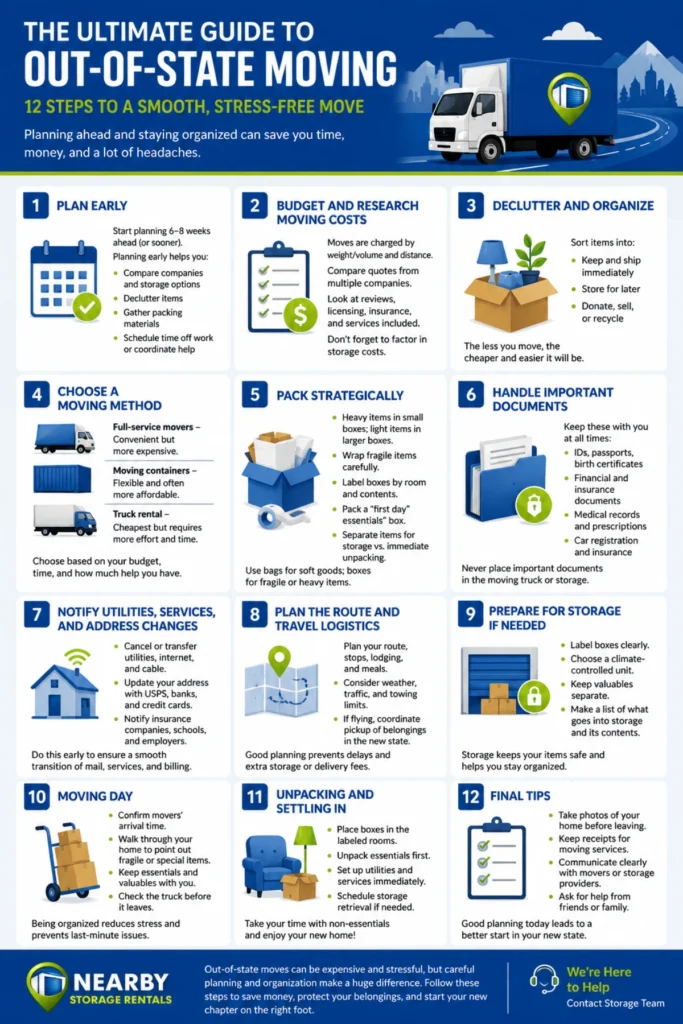
Step 12: Final tips
- Take photos of your home before leaving to document items.
- Keep receipts for moving services for budgeting or tax purposes.
- Communicate clearly with movers or storage providers about timing and special items.
- Ask for help from friends or family if possible.
Out-of-state moves can be expensive and stressful, but careful planning and organization make a huge difference. By following these steps, you can save money, protect your belongings, and start your new chapter on the right foot.










0 Comments