
Storing your camper for the winter without winterizing it properly can lead to costly damage. Pipes can freeze, tanks can crack, and moisture can create mold. Taking the time to winterize ensures your camper is protected and ready for the road when spring arrives.
This guide walks you through the essential steps to winterize your camper before storage.
Choose the Right Storage Location
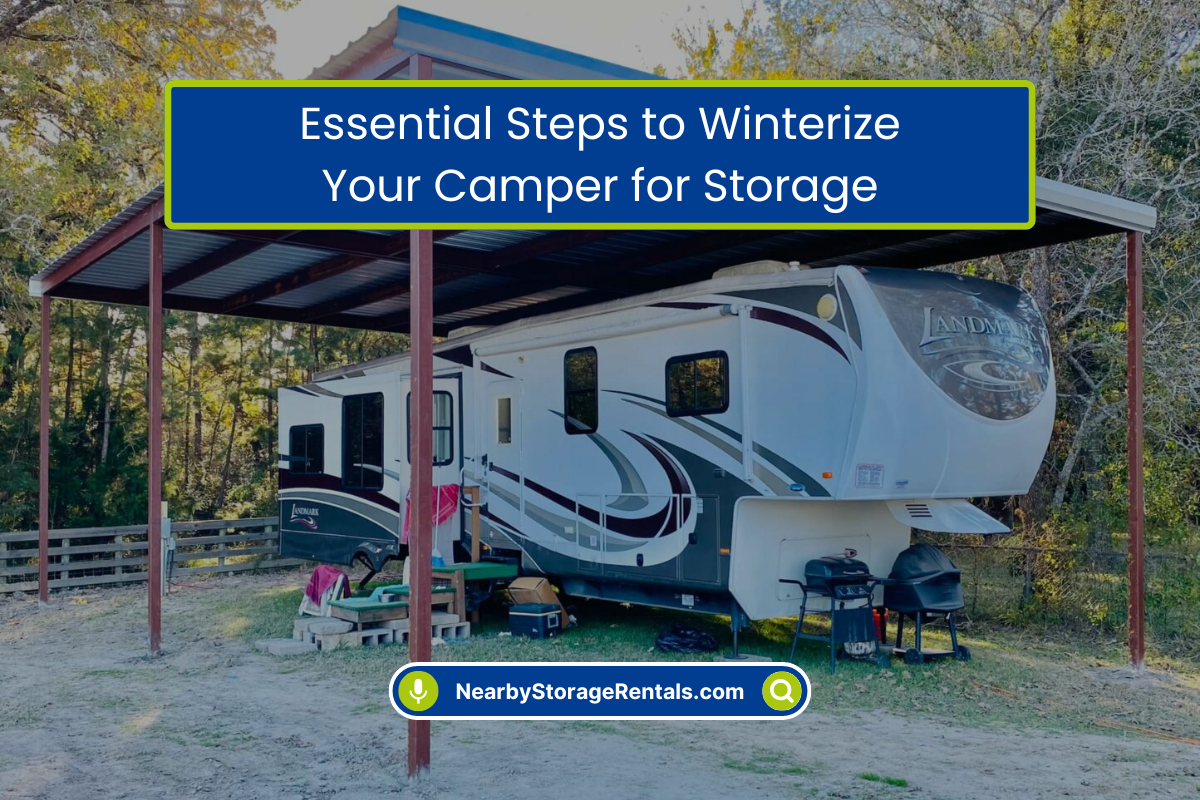
Where you park your camper matters; indoor storage offers the best protection from freezing temperatures, snow, and ice. Covered storage is the next best option, protecting your camper from rain and sun while leaving the sides open. Outdoor uncovered space is cheaper but exposes your camper to all weather elements, so winterizing is even more important.
Clean Your Camper Thoroughly
Start with a deep clean. Remove food, trash, and any items that could attract pests or rot over the winter. Wash and dry the exterior to remove dirt, leaves, or sap that can damage the finish. Inside, clean all surfaces, upholstery, and cabinets. A clean camper reduces the risk of mold and pests while in storage.
Drain Water and Tanks
Frozen water can cause serious damage. Follow these steps:
- Drain the fresh water tank, water heater, and all water lines.
- Flush the plumbing system to remove remaining water.
- Use RV antifreeze in all plumbing lines according to the manufacturer’s instructions.
- Flush the toilet and drain the grey and black tanks, adding antifreeze if needed.
Winterizing the water systems is critical to prevent cracking and costly repairs.
Protect the Engine and Fuel System (Motorized Campers)
For motorized campers, the engine and fuel system also need attention:
- Fill the fuel tank to reduce condensation.
- Add a fuel stabilizer to prevent fuel from breaking down.
- Disconnect the battery or use a trickle charger to maintain a charge.
- For diesel engines, use anti-gel additives if necessary.
Proper engine preparation prevents damage during long-term storage.
Seal and Cover Your Camper
Even when stored indoors, a protective cover helps keep dust and debris off. Outdoor storage requires a high-quality, breathable RV cover to protect against moisture buildup and UV damage. Check seals around windows, doors, and roof vents to ensure they are intact and watertight.
Prevent Pest Damage
Rodents and insects can cause significant harm over the cold weather. Take precautions:
- Seal vents and any openings.
- Use rodent repellents or traps inside compartments.
- Remove food and scented items that could attract animals.
Keeping pests out helps protect wiring, insulation, and upholstery.
Check Tires and Brakes
Tires can develop flat spots if the camper sits in one place for months. Inflate them to the recommended pressure and, if possible, move the camper periodically. Using support jacks can help relieve the weight from tires. Check brakes before and after storage to ensure they remain in working condition.
Remove or Protect Valuables
Remove electronics, documents, and other valuables from the camper. Store them in a secure location at home or in a climate-controlled unit. This prevents theft and damage during storage.
Inspect Periodically
If your storage facility allows access, check your camper every month. Look for signs of leaks, moisture, pests, and inspect the water pump for any signs of damage or leaks. Early detection prevents costly damage.
Final Thoughts
Winterizing your camper before storage is essential for protecting your investment. Proper cleaning, draining, and winterizing plumbing, protecting the engine, sealing and covering the camper, preventing pests, and maintaining tires all contribute to a safe winter storage experience.
Taking these steps ensures that your camper remains in great condition and ready for adventure when the season turns, giving you peace of mind while it sits safely in storage.






0 Comments