
Quick Summary
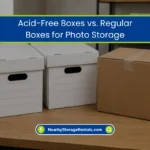
Acid-free boxes are worth buying for irreplaceable family photos, wedding albums, handwritten letters, and important family documents because they prevent acid-related deterioration that can cause paper to yellow, fade, and become brittle. Regular cardboard boxes are fine for replaceable items, so start by protecting the belongings you would hate to lose. A quality acid-free photo box typically costs $15 to $30, but it cannot protect against heat, humidity, or water damage. Store precious keepsakes in a cool, dry, flood-safe environment, ideally a climate-controlled storage unit if your home cannot provide suitable conditions.
Someone asked me this last week. She was standing in my office, holding a plastic tub full of her mom’s old photos, and she said “my sister told me I need to buy special boxes for these. Is that real or is she just being my sister?”
I laughed. But it’s a legit question. So let me just lay it out for you the way I laid it out for her.
Your stuff is already falling apart
That sounds dramatic but it’s true. Paper breaks down. Photos fade. Newsprint turns yellow and crumbly. This happens whether you do anything about it or not. The only question is how fast.
Regular cardboard, the kind every moving box is made of, actually makes it happen faster. There’s a chemical in wood pulp called lignin, and as it ages it produces acid. That acid doesn’t stay put. It off-gasses and leaches into whatever’s touching it.
So when you put your mom’s 1970s photos into a regular cardboard box and stick it in the closet, you’re basically putting them in a slow oven. They’re cooking. Slowly, but they’re cooking.
Acid-free boxes don’t have that chemical. That’s the whole difference. It’s not magic. It’s not fancy. It’s just cardboard that won’t eat your stuff.
Okay but do YOU actually need them?
Here’s where I stop you. Not everything deserves the good box.
I’ve seen people buy acid-free boxes for their old utility bills. Don’t do that. That’s a waste of money and honestly the utility company doesn’t care about your 2016 water bill either.
Ask yourself one question. Can I replace this?
Your passport? Replaceable, but annoying. Your kid’s first tooth envelope? Not replaceable. Your grandmother’s recipe cards in her handwriting? Absolutely not replaceable.
That’s your answer. Replaceable stuff goes in whatever box you’ve got. Irreplaceable stuff gets the good box.
- Old family photos? Good box.
- Wedding pictures? Good box.
- Grandpa’s military papers? Good box.
- Letters from someone who’s passed? Good box.
- Costco receipts from 2019? Regular box. Or the trash. I won’t tell.
The stuff nobody warns you about
Here’s the part that actually matters and almost nobody mentions it.
Buying the box is step one. Where you put the box is step two, and honestly step two might matter more.
I’ve watched people spend eighty dollars on acid-free boxes, fill them with heirloom photos, and then stick the whole thing in a garage that hits 115 degrees every August. You know what happens? The heat destroys the photos anyway. The box couldn’t save them because the environment was working against it the entire time.
Acid-free boxes protect against acid. They do not protect against heat. They do not protect against humidity. They do not protect against a leaky roof or a flooded garage floor.
This is why we push climate control so hard for people storing anything sentimental. Our climate-controlled units stay at a steady temp year round. Not because we’re trying to upsell you. Because I’ve personally watched someone open a box of ruined family photos and I don’t want to watch it again.
You buy the good box. Then you put the good box somewhere that won’t cook it. That’s the full equation.
The honest math on cost
A decent acid-free photo box is fifteen to thirty bucks. That’s real money. I’m not going to pretend it isn’t.
But here’s how I think about it. You probably spent more than that on the last dinner out you had. You spent more than that on the phone you took those photos with. The photos themselves cost money to print.
Fifteen bucks to keep them from turning yellow and sticking together over the next twenty years? That’s the cheapest part of the whole deal.
You don’t have to do it all at once either. Start with one box. Fill it with the oldest, most irreplaceable stuff you own. That’s it. You don’t need to convert your whole closet into a museum archive overnight.
What I’d actually do if it were my stuff
Since you asked, here’s my real answer.
I’d go through my photos and papers and pull out the ones that would gut me to lose. My parents’ wedding album. The letter my dad wrote me before he died. My kids’ hospital bracelets. That pile.
I’d buy one acid-free box that fits that pile. Maybe two if the pile is big.
Then I’d find a spot to store it that doesn’t get hot, doesn’t get damp, and doesn’t flood. For a lot of people that spot doesn’t exist in their house. Garage is too hot, basement is too damp, closet is already full. That’s when people call us.
And honestly? That’s the right time to call. Get the box. Figure out where it’s going to live. If your house can’t give it a good home, ours can. We’ll set you up in a climate-controlled unit and you can stop worrying about it.
So, worth it?
If it’s replaceable, no. Save your money.
If it’s not, yes, and it’s not even close. Buy the box. Put it somewhere safe. Sleep easy.
And if you need somewhere safe, you know where to find us. We’ve got plenty of room. Bring your boxes. We’ll take care of the rest.




0 Comments