
Quick Summary
Boat storage costs in 2026 typically range from about $50 to $150 per month for outdoor storage, $75 to $250 for covered storage, and $150 to $600+ for indoor or climate-controlled storage, while marina options can exceed $2,000 monthly. Your boat’s length, location, season, contract length, and added services all affect the final price. Coastal and urban areas often cost more, while longer contracts and off-season storage can save money. Comparing facilities and asking about setup fees, insurance, winterization, and other add-ons helps you avoid unexpected costs.
Storing your boat isn’t just about finding a spot to park it for winter. If you’ve ever wondered what affects the price of boat storage?, the answer comes down to several factors like storage type, location, boat size, and how much protection you want. Costs vary a lot depending on storage type, location, boat size, and how much protection you want. Knowing what to expect in 2026 helps you budget smarter and avoid surprises when you’re shopping for climate control storage.
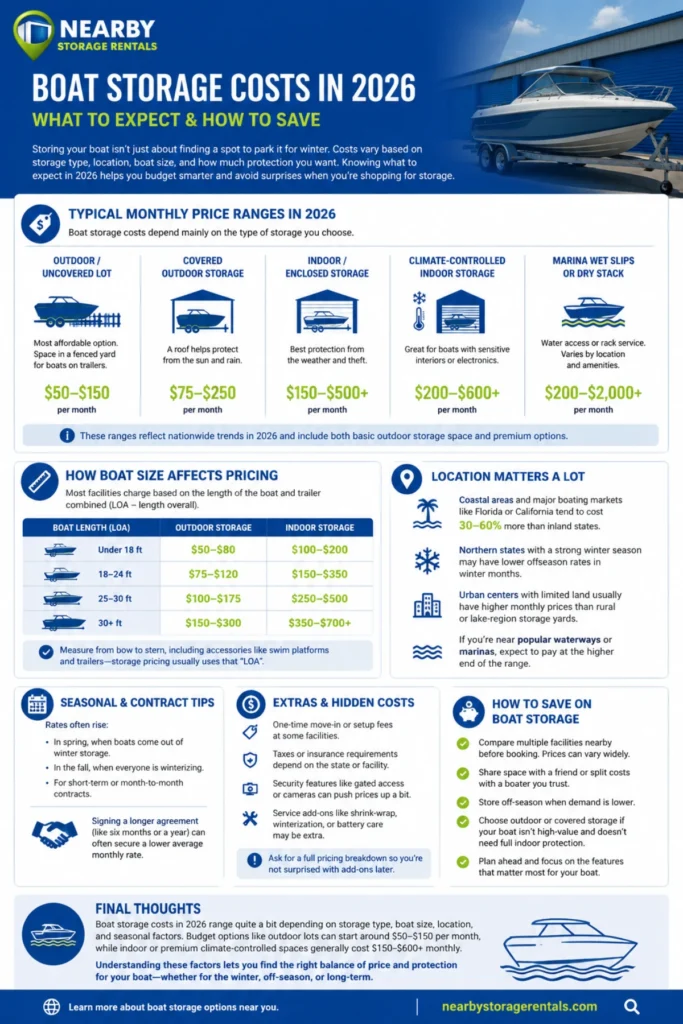
Typical Monthly Price Ranges in 2026
Boat storage costs depend mainly on the type of storage you choose:
- Outdoor / Uncovered lot: about $50–$150 per month on average. This is the most affordable option and is usually just space in a fenced yard for boats on trailers.
- Covered outdoor storage: typically $75–$250 per month. A roof helps protect from the sun and rain.
- Indoor / enclosed storage: often $150–$500+ per month. This offers the best protection from the weather and theft.
- Climate‑controlled indoor storage: closer to $200–$600+ per month in many markets. Great for boats with sensitive interiors or electronics.
- Marina wet slips or dry stack: if you want water access or rack service, costs can range from about $200 to $2,000+ per month, depending on location and amenities.
These ranges reflect nationwide trends in 2026 and include both basic outdoor storage space and premium options.
How Boat Size Affects Pricing
Most long term storage facilities charge based on the length of the boat and trailer combined, and these costs are also influenced by local boat storage options fees. That’s why a 20-foot boat costs significantly less than a 30-footer. For example:
- Under 18 ft: outdoor storage around $50–$80; indoor $100–$200.
- 18–24 ft: outdoor about $75–$120; indoor $150–$350.
- 25–30 ft: outdoor about $100–$175; indoor $250–$500.
- 30+ ft: outdoor about $150–$300; indoor $350–$700+.
Remember to measure from bow to stern, including accessories like swim platforms and trailers—storage pricing usually uses that “LOA” (length overall).
Location Matters a Lot
Where you store your boat makes a big difference:
- Coastal areas and major boating markets like Florida or California tend to cost 30–60% more than inland states.
- Northern states with a strong winter season may have lower offseason rates in winter months.
- Urban centers with limited land usually have higher monthly prices than rural or lake‑region storage yards.
If you’re near popular waterways or marinas, expect to pay at the higher end of the range.
Seasonal and Contract Tips
Demand for boat storage isn’t always consistent through the year. Rates often rise:
- In spring, when people get boats out of climate controlled storage options.
- In the fall, when everyone is winterizing.
- For short‑term or month‑to‑month contracts.
Signing a longer agreement (like six months or a year) can often secure a lower average monthly rate.
Extras and Hidden Costs
The base monthly price isn’t the only cost to consider:
- One‑time move‑in or setup fees at some facilities.
- Taxes or insurance requirements depend on the state or facility.
- Security features like gated access or cameras can push prices up a bit.
- Service addons like shrink‑wrap, winterization, or battery care may be extra.
Ask facilities for a full pricing breakdown, so you’re not surprised with add‑ons later.
How to Save on Boat Storage
If you want to reduce what you pay:
- Compare multiple facilities nearby before booking. Prices can vary widely.
- Share space with a friend or split costs with a boater you trust.
- Store off‑season when demand is lower.
- Choose outdoor or covered storage if your boat isn’t high‑value and doesn’t need full indoor protection.
Planning ahead and knowing what features matter most for your boat helps you save money without sacrificing safety.
Final Thoughts
Boat storage costs in 2026 range quite a bit depending on storage type, boat size, location, and seasonal factors. Budget options like outdoor lots can start around $50–$150 per month, while indoor or premium climate‑controlled spaces generally cost $150–$600+ monthly.
Understanding these factors lets you find the right balance of price and protection for your boat, whether you’re storing it for the winter, off‑season, or long‑term.










0 Comments