
Quick Summary
Winterizing a boat means protecting it from freezing temperatures, moisture, corrosion, and damage while it sits unused. Start by choosing indoor or covered storage when possible, then clean the boat, drain water systems, winterize the engine, protect electronics and interiors, stabilize the fuel, care for the battery, and secure a breathable cover. Periodic inspections for moisture, pests, and cover damage also help prevent expensive repairs. Proper winter boat storage keeps your investment protected and helps ensure the boat is ready for spring.
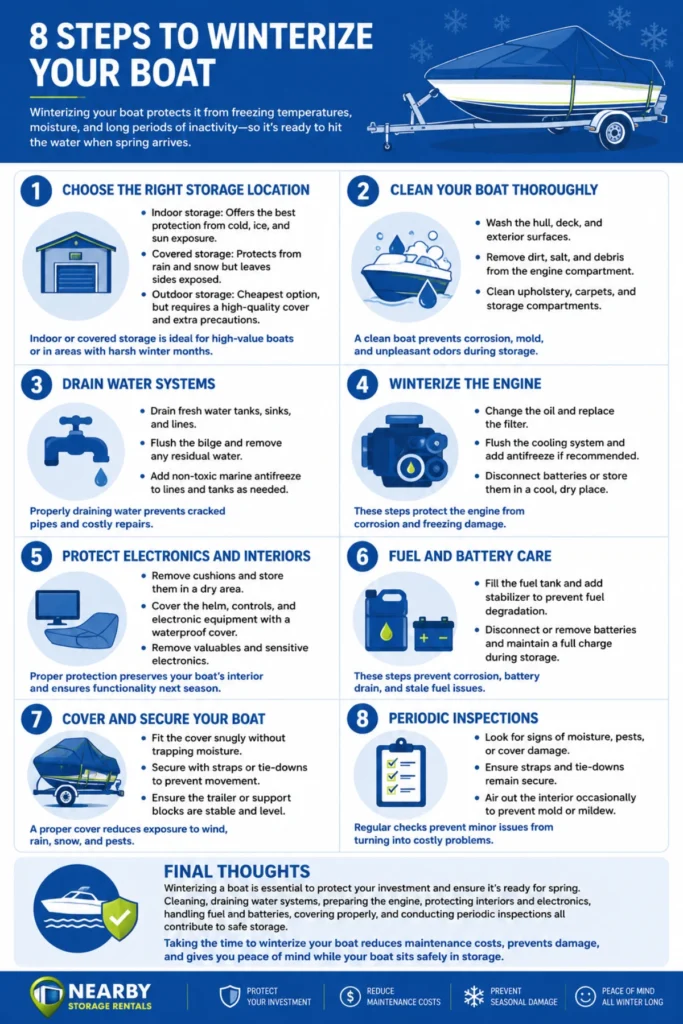
Winterizing your boat before storage is essential to prevent damage from freezing temperatures, moisture, and long periods of inactivity. Proper winterization protects the engine, plumbing, and electronics, ensuring your boat is ready to hit the water when spring arrives.
This guide walks you through the key steps to winterize your boat safely and efficiently.
Step 1: Choose the Right Storage Location
Where you store your boat matters:
- Indoor storage: Offers the best protection from cold, ice, and sun exposure.
- Covered storage: Protects from rain and snow but leaves sides exposed.
- Outdoor storage: Cheapest option, but requires a high-quality cover and extra precautions.
Indoor or covered Space is ideal for high-value boats or in areas with harsh winter months.
Step 2: Clean Your Boat Thoroughly
Before winterizing, clean your boat inside and out:
- Wash the hull, deck, and exterior surfaces.
- Remove dirt, salt, and debris from the engine compartment.
- Clean upholstery, carpets, and storage compartments.
A clean boat prevents corrosion, mold, and unpleasant odors during storage.
Step 3: Drain Water Systems
Water left in the boat can freeze and damage plumbing:
- Drain fresh water tanks, sinks, and lines.
- Flush the bilge and remove any residual water.
- Add non-toxic marine antifreeze to lines and tanks as needed.
Properly draining water prevents cracked pipes and costly repairs.
Step 4: Winterize the Engine
Engine preparation is crucial for long-term storage:
- Change the oil and replace the filter.
- Flush the cooling system and add antifreeze if recommended.
- Disconnect batteries or store them in a cool, dry place.
These steps protect the engine from corrosion and freezing damage.
Step 5: Protect Electronics and Interiors
Moisture and temperature changes can damage electronics and interior components:
- Remove cushions and store them in a dry area.
- Cover the helm, controls, and electronic equipment with a waterproof cover.
- Remove valuables and sensitive electronics.
Proper protection preserves your boat’s interior and ensures functionality next season.
Step 6: Fuel and Battery Care
Gasoline and batteries need attention:
- Fill the fuel tank and add stabilizer to prevent fuel degradation.
- Disconnect or remove batteries and maintain a full charge during storage.
These steps prevent corrosion, battery drain, and stale fuel issues.
Step 7: Cover and Secure Your Boat
A high-quality, breathable cover keeps your boat safe from weather and debris:
- Fit the cover snugly without trapping moisture.
- Secure with straps or tie-downs to prevent movement.
- Ensure the trailer or support blocks are stable and level.
A proper cover reduces exposure to wind, rain, snow, and pests.
Step 8: Periodic Inspections
If possible, check on your boat periodically:
- Look for signs of moisture, pests, or cover damage.
- Ensure straps and tie-downs remain secure.
- Air out the interior occasionally to prevent mold or mildew.
Regular checks prevent minor issues from turning into costly problems.
Final Thoughts
Winterizing a boat is essential to protect your investment and ensure it’s ready for spring. Cleaning, draining water systems, preparing the engine, protecting interiors and electronics, handling fuel and batteries, covering properly, and conducting periodic inspections all contribute to safe storage.
Taking the time to winterize your boat reduces maintenance costs, prevents damage, and gives you peace of mind while your boat sits safely in storage.









0 Comments