
Quick Summary
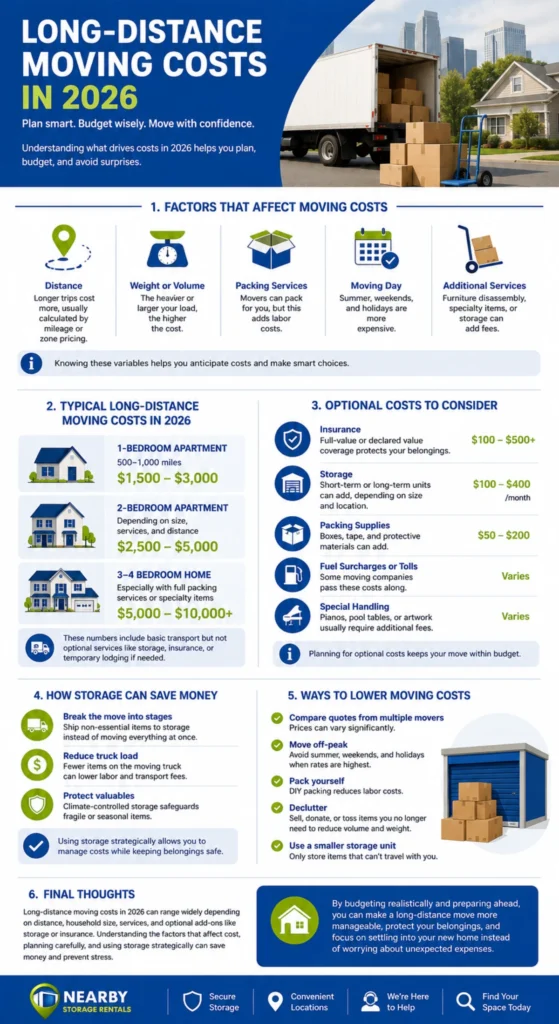
Long-distance moving costs in 2026 typically range from $1,500 to $3,000 for a one-bedroom apartment, $2,500 to $5,000 for a two-bedroom apartment, and $5,000 to $10,000 or more for larger homes. Distance, weight, packing services, timing, and special handling all affect the final price. Extra costs can include insurance, packing supplies, fuel, tolls, and storage, which may run $100 to $400 per month. Comparing movers, moving off-peak, decluttering, packing yourself, and using storage strategically can help keep costs under control.
Moving long distance is exciting, but it can also get expensive fast. Unlike local moves, long-distance relocations involve fuel, mileage, time, and sometimes storage. Understanding what drives costs in 2026 helps you plan, budget, and avoid surprises.
This guide breaks down what you’ll actually pay when moving boxes across cities or states and shows where storage can help save money and reduce stress.
Factors That Affect Moving Costs
Several factors influence the total cost of a long-distance move:
- Distance: Longer trips cost more, usually calculated by mileage or zone pricing.
- Weight or volume: The heavier or larger your load, the higher the cost.
- Packing services: Movers can pack for you, but this adds labor costs.
- Moving day: Summer, weekends, and holidays are more expensive.
- Additional services: Furniture disassembly, specialty items, or storage can add fees.
Knowing these variables helps you anticipate costs and make smart choices.
Typical Long-Distance Moving Costs in 2026
For a one-bedroom apartment, a long-distance move of 500–1,000 miles may cost around $1,500 to $3,000.
A two-bedroom apartment typically ranges from $2,500 to $5,000, depending on size, services, and distance.
Larger homes, three or four bedrooms, can easily cost $5,000 to $10,000 or more, especially with full packing services or specialty items.
These numbers include basic transport but not optional services like storage, insurance, or temporary lodging if needed.
Optional Costs to Consider
Moving often comes with extra expenses you might not initially budget for:
- Insurance: Full-value or declared value coverage protects your belongings.
- Storage: Short-term or long-term units can add $100 to $400 per month, depending on size and location.
- Packing supplies: Boxes, tape, and protective materials can add $50 to $200.
- Fuel surcharges or tolls: Some moving companies pass these costs along.
- Special handling: Pianos, pool tables, or artwork usually require additional fees.
Planning for optional costs keeps your local move within budget.
How Storage Can Save Money
Storage units can reduce stress and costs during long-distance moves. Here’s how:
- Break the move into stages: Ship non-essential items to storage instead of moving everything at once.
- Reduce truck load: Fewer items on the moving company truck can lower labor and transport fees.
- Protect valuables: Climate-controlled storage safeguards fragile or seasonal items.z
Using storage strategically allows you to manage costs while keeping belongings safe.
Ways to Lower Moving Costs
- Compare quotes from multiple movers: Prices can vary significantly.
- Move off-peak: Avoid summer, weekends, and holidays when rates are highest.
- Pack yourself: DIY packing reduces labor costs.
- Declutter: Sell, donate, or toss items you no longer need to reduce volume and weight.
- Use a smaller storage unit: Only store items that can’t travel with you.
Smart planning helps you stay on budget without sacrificing convenience or safety.
Final Thoughts
Long-distance moving costs in 2026 can range widely depending on distance, household size, services, and optional add-ons like storage or insurance. Understanding the factors that affect cost, planning carefully, and using storage strategically can save money and prevent stress.
By budgeting realistically and preparing ahead, you can make a long-distance move more manageable, protect your belongings, and focus on settling into your new home instead of worrying about unexpected expenses.










0 Comments