
Quick Summary
Before RV storage, remove food, beverages, chemicals, valuables, electronics, bedding, important documents, trash, and seasonal gear that could attract pests, cause odors, or suffer damage. Drain and winterize the fresh, gray, and black water systems to prevent frozen pipes, disconnect or remove batteries, and use fuel stabilizer when storing a motorized RV. Cleaning the interior and storing linens and documents somewhere dry also helps prevent mold, moisture damage, and pests. These steps keep the RV clean, safe, and ready for your next trip.
Storing your RV for any period requires preparation. Leaving the wrong items inside can cause damage, attract pests, or create extra work when you’re ready to use it again. Knowing what to remove ensures your RV stays safe, clean, and ready to hit the road when you return.
This guide walks you through what to remove from your RV before storage to avoid headaches and protect your investment.
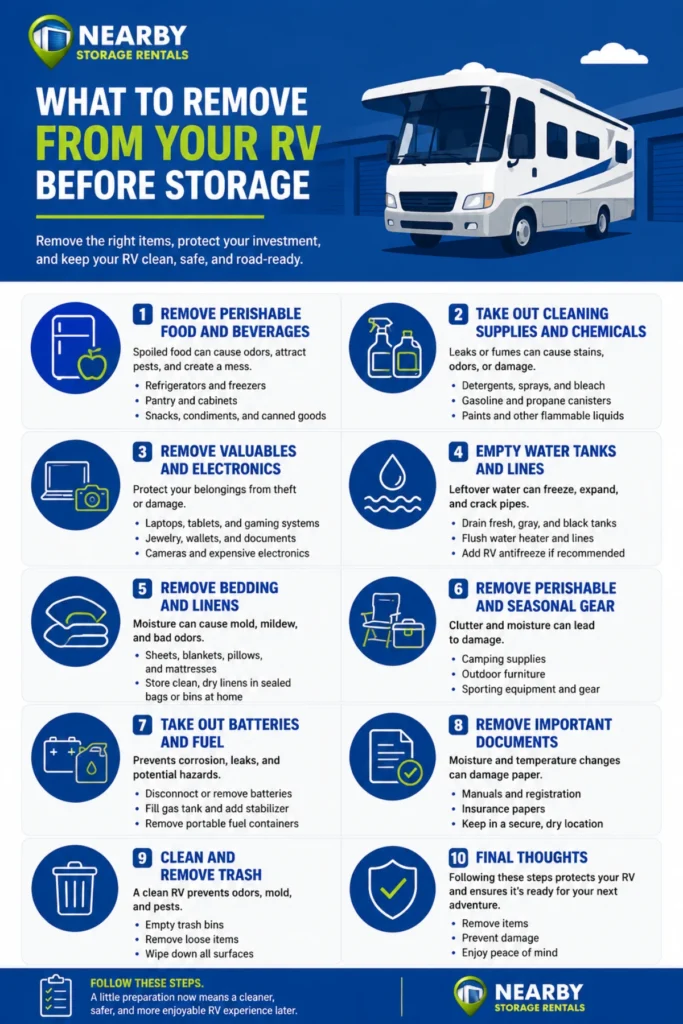
Remove Perishable Food and Beverages
The first step is clearing out all food. Even sealed items can spoil, attract rodents, or grow mold. Check:
- Refrigerators and freezers.
- Pantry and cabinets.
- Snacks, condiments, and canned goods.
Emptying your RV of perishables prevents bad smells, pests, and messes over the storage period.
Take Out Cleaning Supplies and Chemicals
Cleaning products, solvents, and chemicals can leak or evaporate, creating odors or stains. Remove:
- Detergents, sprays, and bleach.
- Gasoline and propane canisters are not approved for storage.
- Paints and other flammable liquids.
Store these items safely at home or in a secure shed rather than inside the RV.
Remove Valuables and Electronics
Electronics and personal valuables are at risk in storage place, even in secured facilities. Take out:
- Laptops, tablets, and gaming systems.
- Jewelry, wallets, and personal documents.
- Cameras and expensive electronics.
These items are better stored at home or in a climate-controlled, secure location to prevent theft or damage.
Empty Water Tanks and Lines
Water left in your RV can freeze, expand, and crack pipes. For winter or long-term storage:
- Drain the fresh water tank, gray tank, and black tank.
- Flush the water heater and water lines.
- Add RV antifreeze if recommended.
Proper winterization prevents costly plumbing repairs and keeps your RV ready to use in spring.
Remove Bedding and Linens
Sheets, blankets, pillows, and mattresses can trap moisture and attract mold or pests. Remove them from beds and furniture before storage. Store clean, dry linens in sealed plastic bags or bins at home.
This step helps keep the interior of your RV dry and odor-free.
Remove Perishable and Seasonal Gear
Items like camping supplies, outdoor furniture, or sporting equipment should be taken out if they can be stored elsewhere. Leaving them inside can increase clutter, weight, or risk of damage from shifting or moisture.
Take Out Batteries and Fuel
If your RV has batteries, disconnect or remove them. This prevents corrosion and extends battery life.
For motorized RVs, fill the gas tank and add fuel stabilizer to avoid fuel breakdown, but remove smaller portable fuel containers for safety.
Remove Important Documents
Any papers, manuals, or important documents should be taken out and stored safely. Moisture and temperature fluctuations in storage can damage paper, so keep them in a secure, dry location.
Clean and Remove Trash
Finally, give your RV a thorough cleaning and remove all trash. Empty trash bins, remove loose items, and wipe down surfaces. A clean RV reduces odors, prevents mold, and discourages pests during storage service.
Frequently Asked Questions
Q1. Do I need to remove sealed food from my RV before storage?
Remove food from your RV before storage, including sealed products that may be overlooked in cupboards or under seating.
Food can create odors or attract pests, and facility policies may restrict it.
We recommend checking every compartment against a checklist rather than assuming an unopened packet is harmless during a long absence.
Q2. Should I take medications out of an RV before storing it?
Take medications out of an RV before storage and keep them in conditions appropriate to their instructions.
Storage temperatures can vary, and you may need the medication before the vehicle is accessible again.
Nearby Storage Rentals suggests checking bathroom cabinets and small drawers carefully so essential items are not accidentally left behind.
Q3. Can I leave portable electronics in an RV if the parking area is gated?
A gated parking area does not make portable electronics risk-free inside a stored RV.
Remove valuable or sensitive equipment where practical and follow its storage instructions.
Check insurance terms for anything remaining, rather than assuming access controls guarantee security or that vehicle coverage automatically protects every personal item aboard.
Q4. How do I remember everything I removed from my RV for storage?
Make a removal inventory as you prepare the RV and identify where each item will be kept.
Separate essentials from equipment that must return before travel.
Photograph useful arrangements and keep the list outside the vehicle, so recommissioning does not depend on recalling which locker once contained a particular safety item.
Q5. Should I remove RV propane cylinders myself before storage?
Handle RV propane cylinders only according to the vehicle manufacturer's instructions and the facility's rules.
Do not disconnect unfamiliar gas equipment without qualified help.
Ask what is permitted for your specific setup, because advice for a loose camping canister may not apply to an installed system or a different storage arrangement.
Q6. Is removing bedding enough to prevent mold inside a stored RV?
Removing bedding alone does not prevent mold inside a stored RV.
The vehicle still needs appropriate cleaning, drying, ventilation and attention to leaks.
We recommend following the manufacturer's storage procedure and inspecting periodically, rather than relying on one cleared cupboard or an empty bed to control the whole interior environment.
Q7. Can I leave important vehicle paperwork inside my RV during storage?
Keep accessible copies of important vehicle paperwork outside the stored RV and follow any legal requirements for the originals.
Consider what you may need for insurance, servicing or collection while the vehicle is inaccessible.
Do not leave irreplaceable personal documents inside merely because they normally live in a dashboard compartment.
Q8. What should I check in an RV refrigerator before long-term storage?
Empty and clean the RV refrigerator, then prepare it according to its manufacturer's storage instructions.
Check concealed trays and compartments for moisture or residue.
Follow the specified procedure for the door and ventilation, because simply switching off a refrigerator with food or damp surfaces inside can leave a problem for your return.
Final Thoughts
Properly removing certain items from your RV before storage protects it from damage, pests, and odors. Perishable food, chemicals, valuables, bedding, water, batteries, and documents should all be taken out. Seasonal gear and trash should also be removed to keep the RV organized and clean.
Following these steps ensures your RV stays in good condition, making it ready for use when you’re ready to hit the road again.





0 Comments