
Quick Summary
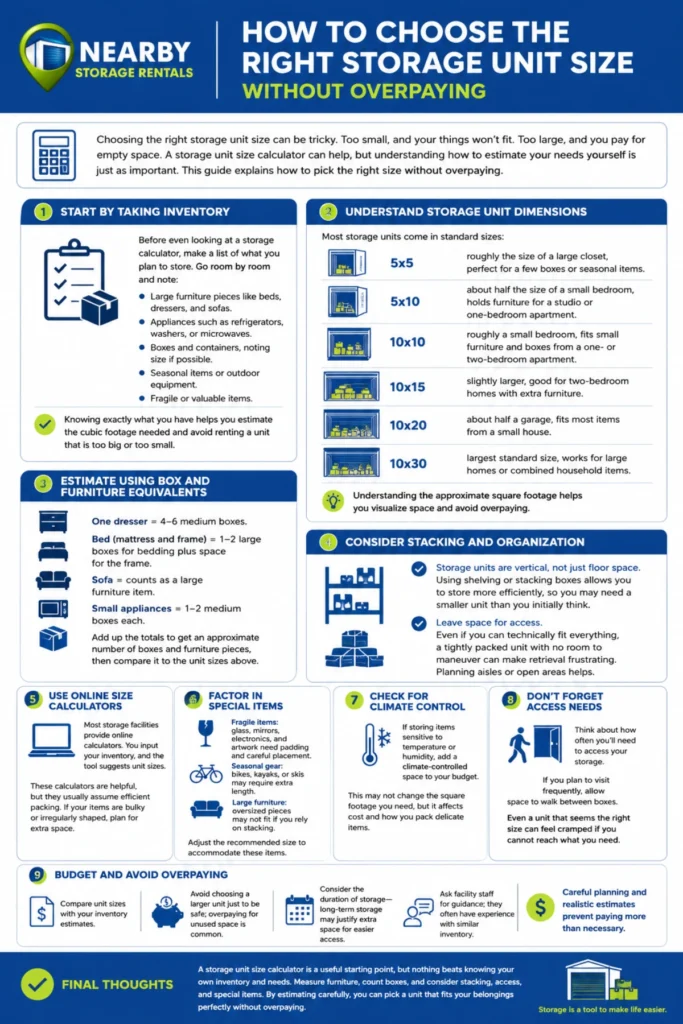
A storage unit size calculator is a useful starting point, but your inventory should determine the final choice. Start by counting boxes and measuring large furniture, then compare your belongings with common sizes from 5×5 to 10×30. Use vertical space by stacking safely, but leave room to walk and reach frequently used items. Bulky, fragile, or unusually shaped items may require extra space, while climate-sensitive belongings may need climate control. Careful planning helps you avoid renting more space than you need while keeping everything organized and accessible.
Choosing the right storage unit size can feel tricky. Too small, and your things won’t fit. Too large, and you pay for empty space. A storage unit size calculator can help, but understanding how to estimate your needs yourself is just as important. This guide explains how to pick the right size storage unit without overpaying.
Start by taking inventory
Before even looking at a storage calculator, make a list of what you plan to store. Go room by room and note:
- Large furniture pieces like beds, dressers, and sofas.
- Appliances such as refrigerators, washers, or microwaves.
- Boxes and containers, noting size if possible.
- Seasonal items or outdoor equipment.
- Fragile or valuable items.
Knowing exactly what you have helps you estimate the cubic footage needed and avoid renting a unit that is too big or too small.
Understand storage unit dimensions
Most storage units come in standard sizes:
- 5×5: roughly the size of a large closet, perfect for a few boxes or seasonal items.
- 5×10: about half the size of a small bedroom, holds furniture for a studio or one-bedroom apartment.
- 10×10: roughly a small bedroom, fits small furniture and boxes from a one- or two-bedroom apartment.
- 10×15: slightly larger, good for two-bedroom homes with extra furniture.
- 10×20: about half a garage, fits most items from a small house.
- 10×30: largest standard size, works for large homes or combined household items.
Understanding the approximate square footage helps you visualize space and avoid overpaying.
Estimate using box and furniture equivalents
A simple way to gauge storage needs is to translate your items into standard equivalents:
- One dresser = 4–6 medium boxes.
- Bed (mattress and frame) = 1–2 large boxes for bedding plus space for the frame.
- Sofa = counts as a large furniture item.
- Small appliances = 1–2 medium boxes each.
Add up the totals to get an approximate number of boxes and furniture pieces, then compare it to the unit sizes above.
Consider stacking and organization
Storage units are vertical, not just floor space. Using shelving or stacking boxes allows you to store more efficiently, so you may need a smaller unit than you initially think.
Leave space for access. Even if you can technically fit everything, a tightly packed unit with no room to maneuver can make retrieval frustrating. Planning aisles or open areas helps.
Use online size calculators as a guide
Most storage facilities provide online calculators. You input your inventory, and the tool suggests unit sizes. These calculators are helpful, but they usually assume efficient packing. If your items are bulky or irregularly shaped, plan for extra space.
Factor in special items
Some items require extra care:
- Fragile items: glass, mirrors, electronics, and artwork need padding and careful placement.
- Seasonal gear: bikes, kayaks, or skis may require extra length.
- Large furniture: oversized pieces may not fit if you rely on stacking.
Adjust the recommended size to accommodate these items.
Check for climate control
If storing items sensitive to temperature or humidity, add a climate-controlled space to your budget. This may not change the square footage you need, but it affects cost and how you pack delicate items.
Don’t forget access needs
Think about how often you’ll need to access your storage. If you plan to visit frequently, allow space to walk between boxes. Even a unit that seems the right size can feel cramped if you cannot reach what you need.
Budget and avoid overpaying
- Compare unit sizes with your inventory estimates.
- Avoid choosing a larger unit just to be safe; overpaying for unused space is common.
- Consider the duration of storage—long-term storage may justify extra space for easier access.
- Ask facility staff for guidance; they often have experience with similar inventory.
Careful planning and realistic estimates prevent paying more than necessary.
Final thoughts
A storage unit size calculator is a useful starting point, but nothing beats knowing your own inventory and needs. Measure furniture, count boxes, and consider stacking, access, and special items. By estimating carefully, you can pick a unit that fits your belongings perfectly without overpaying.
Storage is a tool to make life easier, not a source of frustration. Choosing the right size keeps your items safe, organized, and accessible while keeping costs reasonable.










0 Comments