
Quick Summary
Autographed memorabilia needs more protection than a basic storage unit can provide. Heat, freezing temperatures, humidity, and condensation can damage signatures, paper, leather, jerseys, and other collectibles, so climate-controlled storage is worth considering. Use heavy-duty plastic bins with sealed lids and desiccant packs, acid-free paper for photos and clothing, and keep items off concrete floors and away from unit walls. Check your collection every few months for moisture or damage, and make sure your insurance covers valuable memorabilia stored off-site.
So you collect autographs. Signed jerseys. Photos. Balls. Whatever it is. And now you’ve got too much of it and you need to put some away.
I get it. I really do. My garage looks like a sports memorabilia bomb went off in there. We all run out of wall space eventually.
But here’s the thing that scares me. Most people just throw their signed stuff in a box, shove it in a storage unit, and pray nothing bad happens. And honestly? That usually doesn’t work out great.
Let me tell you why and what you can actually do about it.
Heat and Cold Are Not Your Friends
This sounds obvious but people don’t think about it until it’s too late.
If you put your signed baseball in a non-climate-controlled unit in July, that unit is going to be over 100 degrees inside. I’m not exaggerating. Those metal boxes bake in the sun. And when it’s that hot, the ink on your ball wants to run. The leather dries out. It cracks.
Then winter comes and it freezes. Things expand and contract. That signed photo you have? The paper gets brittle. It can crack right along the crease.
People always think “oh it’s just a storage unit, how bad can it be?” But it’s basically like leaving your stuff in a car. You wouldn’t leave a signed guitar in your car in August, would you? Same deal.
Moisture is the Real Villain Here
Forget heat for a second. Let’s talk about humidity.
Here’s what happens. When it gets hot during the day and cool at night, that temperature change creates condensation. Water forms on the walls of the unit. On the floor. Inside your boxes if you’re not careful.
And that water? It ruins everything.
I’ve seen signed photos get wavy and warped from moisture. I’ve seen signatures bleed and blur. I’ve seen mold grow on jerseys. Mold is not something you can just wipe off. It stains. It smells. And once it’s there, your item is basically ruined.
So if you’re storing signed stuff, you need to think about moisture. That’s not optional.
The Container Matters More Than You Think
Okay so you’ve got a storage unit. Now what do you put your stuff in?
Cardboard boxes are everywhere. They’re free sometimes. But they’re also terrible for long term storage. Cardboard absorbs moisture. It attracts bugs. Silverfish love cardboard. And they will eat through it to get to your signed photos. No joke.
Plastic bins are better but you have to be smart about it.
Those clear ones from Target that cost like eight bucks? The lids don’t seal well. They crack. They warp. If you stack them too high, the bottom one collapses. I’ve seen it happen.
You want the heavy duty ones. The kind with the rubber gasket around the lid. The ones that actually click shut. They cost more but they actually keep moisture out. And you’re protecting stuff that matters to you, so why cheap out?
But here’s something nobody tells you. If you seal a bin completely airtight and there’s moisture trapped inside, you just created a little sweatbox. That’s why you need to put desiccant packs in there. The little silica gel things. You know how they come in shoe boxes? Save those. Throw a few in every bin. They absorb the moisture and keep things dry.
Wrapping Stuff the Right Way
This is where most people mess up.
I’ve seen people wrap signed photos in newspaper. Bad idea. The ink from the newspaper will transfer onto your photo over time. It’s a disaster.
I’ve seen people use regular tissue paper. Also bad. Regular tissue paper has acid in it. That acid breaks down paper over time. It causes yellowing and brittleness.
You need acid-free paper. It costs like ten bucks for a big pack on Amazon. Use that to wrap your photos and posters. It’s made to not break down or damage your stuff.
For jerseys and clothes? Don’t fold them tight. That creates creases that set into the fabric. Use acid-free tissue paper between the folds. And for the love of everything, don’t put them in those cheap plastic garment bags from the dry cleaner. Those trap moisture. Use cotton garment bags if you’re hanging them.
For balls and helmets and 3D stuff? Wrap each one separately. Don’t let them touch each other. I had a guy once put a signed basketball next to a signed football and when he came back, the rubber had kind of melted together. Not cool.
Where in the Unit Should Everything Go?
This sounds picky but it matters.
Don’t put your boxes right against the walls of the unit. The walls get hot and cold and that creates condensation. Put your boxes in the middle. Leave some space around them for air to circulate.
Also, don’t put your boxes directly on the concrete floor. Concrete sweats. It gets damp. Put a pallet down or some wooden boards and set your boxes on those. Even a cheap plastic shelf is better than nothing.
And don’t stack boxes too high. The weight can crush the bottom boxes and damage whatever’s inside. Keep it to like three or four high max.
Go Check On Your Stuff
I know this seems extra but seriously. Go look at your stuff every couple months.
Just open a box. Feel if the paper is damp. Smell if it’s musty. Look at the corners of your photos to see if they’re curling or yellowing.
One of my clients didn’t check his signed record collection for two years. Two years. When he finally went back, the records had warped and the signatures on the sleeves had bled. He was so upset. And he could’ve caught it early if he’d just checked.
You don’t have to go every week. But every few months? It’s worth it. Stuff doesn’t get ruined overnight. It gets ruined slowly. And if you catch it early, you can fix it before it’s too late.
Insurance is Actually Important
I’m not trying to sell you anything here but you should think about insurance.
If your collection is worth actual money, check if your homeowners or renters insurance covers stuff in storage. A lot of them don’t. Or they have super low limits.
We can hook you up with third party insurance at our facility if you want. It’s not expensive. And it gives you peace of mind.
Because here’s the thing. Even if you do everything right, stuff happens. A pipe bursts somewhere. A roof leaks. You don’t want to be the person standing there looking at ruined stuff with no way to replace it.
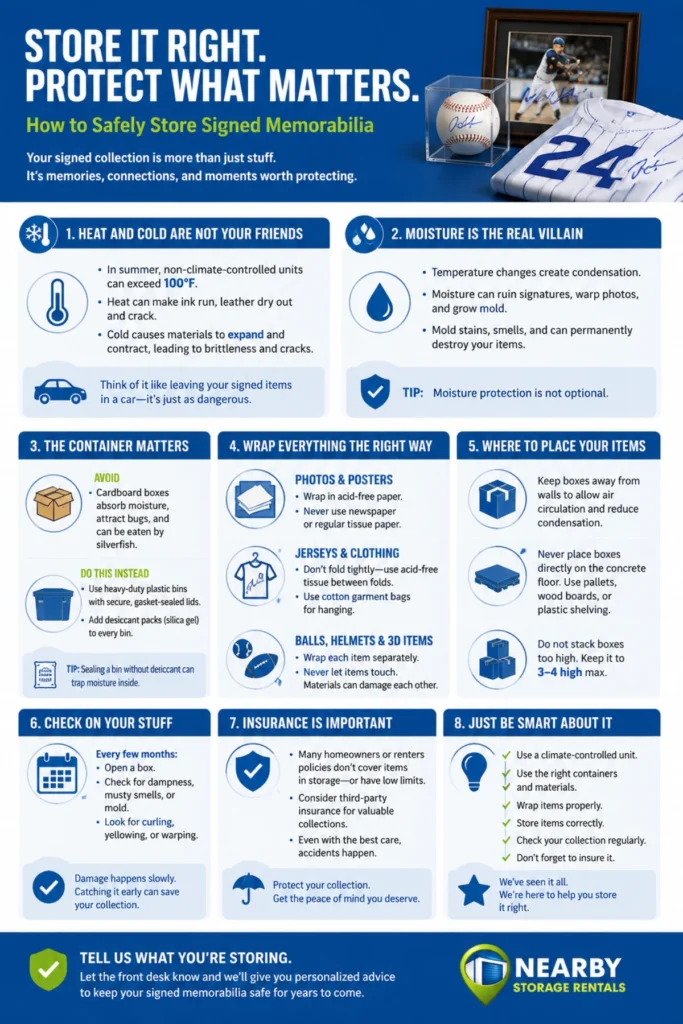
Just Be Smart About It
Look, you don’t need to be a museum archivist to store signed stuff. You just need to use your head.
Don’t put it in a cheap unit that’s basically a metal shed. Don’t use cardboard boxes for years at a time. Don’t wrap stuff in newspaper or regular tissue. And don’t forget about it completely.
If you’re storing autographed memorabilia with us, just tell the front desk what you’re putting in there. We can give you specific advice for your stuff. We’ve seen everything. We know what works and what doesn’t.
Your signed collection is more than just stuff. It’s memories. It’s connections to people you admire. It’s worth taking care of properly.










0 Comments