
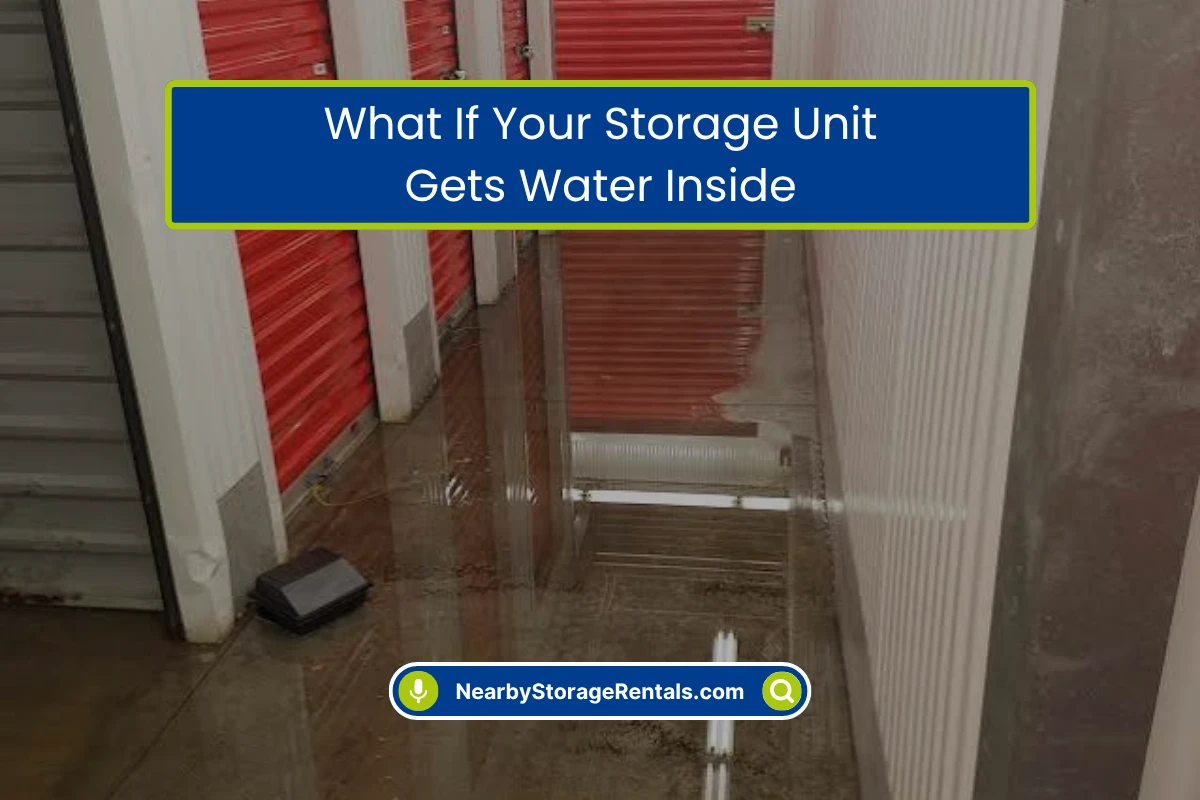
Last Tuesday, my neighbor Sarah called me in a panic. She’d just opened her storage unit and found two inches of murky water covering the floor. Her daughter’s wedding dress was in there. Her husband’s baseball card collection. Boxes of photo albums she’d been meaning to organize for years.
She was crying. I get it.
Here’s the thing about storage units and water – most people don’t think about it until they’re standing in it. And by then, you’re already behind the eight ball.
The Moment You Open That Door
You slide that lock off. You pull up the door. And your stomach drops.
Maybe it’s a puddle. Maybe it’s more. Maybe you see water stains climbing up the walls or dripping from the ceiling. Whatever it looks like, that first sight hits different. All those things you carefully packed, all those boxes you labeled so neatly – suddenly they’re sitting in water.
I’ve talked to dozens of people who’ve been through this. And almost every single one of them says the same thing: “I didn’t know what to do first.”
So let’s fix that right now. Because if this ever happens to you, the choices you make in the first ten minutes change everything.
Before You Touch a Single Thing
Your instinct is going to be to grab everything and start hauling it out. Do not do this. I’m serious.
Stop right there. Pull out your phone. Take pictures of everything. The water level. Which boxes are sitting in it. The source of the water if you can spot it. What’s already damaged and what’s still dry.
I know this feels like wasting precious time. But those photos are your insurance claim. Without them, you’re just telling a story. With them, you’ve got proof.
Sarah didn’t take photos. She panicked and started dragging boxes out. The cardboard fell apart in her hands. Wedding dress dropped right into the water. By the time she called me, the dress was completely soaked and she had no record of how it happened or what it looked like before she touched it. Her insurance adjuster gave her a hard time.
Learn from Sarah.
Now Look at the Water
Take a good look. What color is it? Is it clear or murky?
If it’s clean water from a broken pipe, that’s the best case scenario – and I say that loosely because none of this is fun. But if it’s brownish or dirty, you’re dealing with floodwater or sewage backup. And that changes everything.
Dirty water brings bacteria. It brings contamination. Your stuff isn’t just wet – it’s potentially hazardous. And honestly? Some things you need to just walk away from. It sucks. But your health isn’t worth saving a box of old t-shirts.
What Comes Out First
Okay, you’ve taken your photos. You’ve assessed the water. Now you start extracting.
But you don’t grab the closest thing to you. You grab the most important things first.
Documents. Photos. Electronics. Family heirlooms. Anything with sentimental or practical value that can’t be replaced.
Here’s a trick I learned from a restoration guy – use plastic storage tubs for the stuff you’re saving. Not cardboard boxes. Because cardboard is soaking wet and will turn to mush the second you try to move it. You’ll be standing there holding the bottom of a box while everything inside crashes to the floor.
We actually recommend our customers keep a few empty plastic bins in their unit at all times. They take up almost no space, but when you need them, you really need them.
The Clock Is Ticking
Here’s what most people don’t realize – you’ve got maybe 48 hours before mold starts showing up. And mold doesn’t play fair.
It doesn’t just ruin your stuff. It gets into everything. It smells. It triggers allergies. It spreads. I’ve seen people try to salvage furniture that looked fine after drying, only to discover mold growing inside the cushions six months later.
So here’s the timeline you’re working with:
- First 24 hours – you’ve got a fighting chance to save most things.
- 24 to 48 hours – you’re in the danger zone.
- After 48 hours – you’re making peace with loss.
This is why speed matters. Not panicked speed, but purposeful speed.
What You Can Actually Save?
Let me be straight with you about what works and what doesn’t.
Things that bounce back:
- Solid wood furniture (dry it slow, don’t put it in direct sun).
- Metal items (wipe them down and treat for rust).
- Glass and ceramics (wash, dry, you’re good).
- Plastic containers and items.
- Sealed things that stayed sealed.
Things that are tricky:
- Electronics – maybe, if they were off and dried properly.
- Books – you can freeze them to stop damage, then dry them later.
- Photos – treat them like books, freeze them.
- Clothes – wash immediately with disinfectant.
Things you’re probably losing:
- Particle board furniture (that stuff swells and falls apart).
- Mattresses and upholstered furniture.
- Anything that sat in dirty water for more than an hour.
- Things with visible mold starting.
The Drying Part Nobody Talks About
Once you’ve got your stuff out, you need to dry it. But here’s where people mess up – they try to rush it.
I get it. You want your life back to normal. You want your stuff dry. But putting a fan directly on wet wood? That causes checking and cracking. Blasting heat on leather? You’ll ruin it.
The right way is slow and steady. Room temperature. Good airflow. Maybe dehumidifiers if you have them. And patience.
Sarah tried to dry her wedding dress with a hair dryer. The lace shriveled up. The beading melted in places. She would’ve been better off letting it air dry for a couple of days.
Insurance – The Part Everyone Hates
Here’s the conversation nobody wants to have.
You need to call your insurance company. And you need to do it fast.
But before you call, you need your ducks in a row. That inventory you’ve been meaning to make? You’re going to wish you had it. Every item, what it cost, when you bought it.
And here’s something most people don’t realize – your stuff might be covered by your renter’s insurance or homeowner’s policy even when it’s in a storage unit. But you have to check. Some policies cover it, some don’t.
We actually offer insurance at our facility, but we always tell people to check their own policies first. Sometimes you’re already covered without knowing it.
What About the Unit Itself?
Once your stuff is out, you need to deal with the unit.
Don’t just close it up and assume it’ll dry on its own. It won’t. That moisture stays trapped in there and causes bigger problems down the road.
Tell the facility manager immediately. Like, as soon as you discover the water. They need to know. They might have dehumidifiers. They might need to fix something. They definitely need to clean and dry the space before anyone else uses it.
And if you’re renting from a place that doesn’t take that seriously? That’s a red flag. A really big one.
How to Stop This From Happening Again?
After you’ve dealt with the crisis, you’re probably thinking – how do I make sure this never happens again?
- First, don’t store things directly on the floor. Ever. Even if the unit looks dry. Even if the manager tells you it’s fine. Put everything up on pallets or shelves.
- Second, use plastic bins instead of cardboard boxes. They’re waterproof. They stack better. They protect your stuff.
- Third, leave space between your stuff and the walls. Air needs to circulate. Condensation happens when there’s no airflow.
- And fourth – and this is the one nobody does – check on your unit every couple of months. Not because you need to move things around. But because you need to catch small problems before they become big ones. A tiny leak that you spot early is a minor inconvenience. One that goes unnoticed for six months is a disaster.
At our facility, we do regular inspections. We check roofs. We check pipes. We monitor for anything that looks off. But we also encourage our customers to be part of the process. You know your stuff better than anyone. If something feels wrong, say something.
The Emotional Part Nobody Prepares You For
Here’s the thing that surprised me most about talking to people who’ve gone through this – it’s not just about the stuff.
It’s about the memories. That box of your kid’s artwork from kindergarten. Those photo albums from your parents’ wedding. Your grandmother’s quilt that she made by hand.
Water damage takes more than objects. It takes pieces of your history.
I’m not saying this to make you feel worse. I’m saying it because you need to give yourself permission to be upset about it. It’s not just clutter. It matters.
And then you move forward. You salvage what you can. You let go of what you can’t. And you make sure you’re better prepared next time.
The Last Thing I’ll Say
Water in your storage unit is a headache. It’s expensive. It’s emotionally draining. And it’s absolutely something you can handle if you keep your head straight.
Take photos first. Prioritize what matters. Dry things properly. Deal with insurance. And then figure out what you want to do differently going forward.
Sarah ended up saving the wedding dress, by the way. Not the beading – that was a loss. But the dress itself dried okay. She had it cleaned. She said it’s going to be fine.
She lost the baseball cards though. And a lot of the photos. That was the hard part.
But she learned. And if it ever happens to you, you’ll be ahead of it.
Just remember – you’re not the first person this has happened to. And you won’t be the last. All you can do is be prepared, act fast, and don’t beat yourself up about what you couldn’t save.








0 Comments