
Quick Summary
A storage unit can help you declutter storage effectively without throwing away things you still want. Start by sorting belongings into keep, donate, toss, and store, then choose a unit size that matches what you actually have. Pack items in labeled boxes, group them by category, and leave clear paths for easy access. For sensitive belongings such as wooden furniture, electronics, artwork, and documents, consider climate control. A simple inventory with photos also makes finding and managing stored items much easier.
Sometimes, no matter how much you clean, your home feels cluttered. Closets overflow, the garage is full of tools and boxes, and every surface seems to have “stuff” that doesn’t have a home. A storage unit can be the solution to finally getting organized, especially when you need to declutter storage unit effectively.
The trick is using storage strategically, not as a dumping ground. With a little planning, a storage place can help you declutter, protect your belongings, and make your home functional and stress-free.
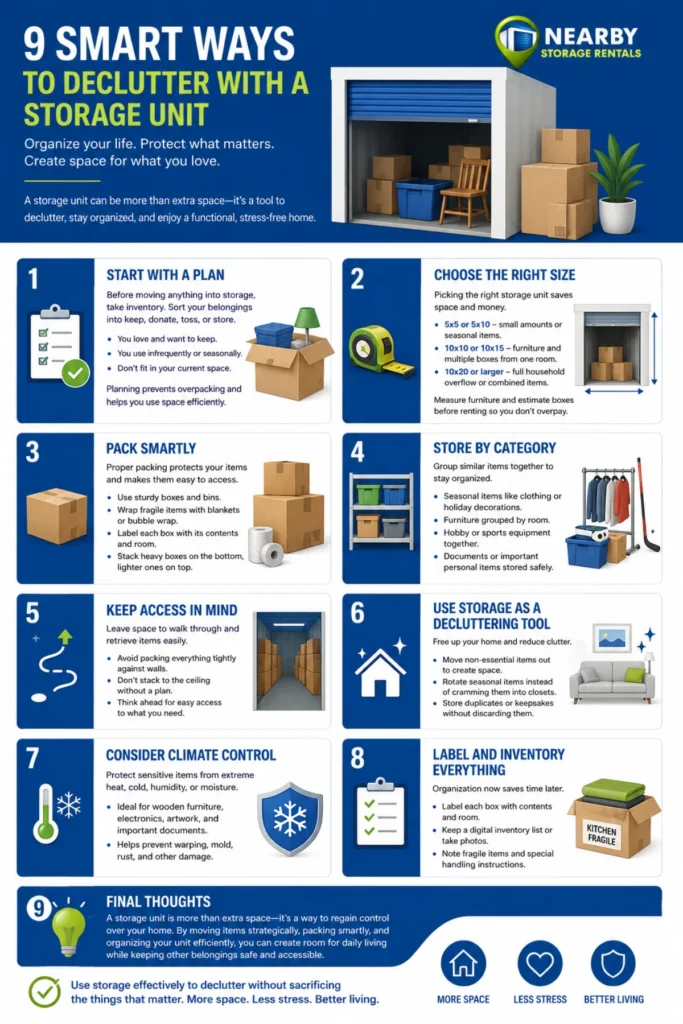
Start With a Plan
Before moving anything into new storage, take inventory. Identify items that:
- You love and want to keep.
- You use it infrequently or seasonally.
- Don’t fit in your current space.
Sort your belongings into keep, donate, toss, or store. Knowing exactly what goes into storage helps prevent overpacking and ensures you use the space efficiently.
Choose the Right Size
Picking the right storage unit is key. Too small, and your items won’t fit; too large, and you’ll pay for empty space. Consider:
- 5×5 or 5×10 for small amounts.
- 10×10 or 10×15 for furniture and multiple boxes from one room.
- 10×20 or larger for full household overflow or combined family items.
Measure furniture and estimate boxes before renting so you don’t overpay.
Pack Smartly
Proper packing protects your items and makes them easy to access:
- Use sturdy boxes and bins.
- Wrap fragile items with blankets or bubble wrap.
- Label each box with its contents and room.
- Stack heavy boxes on the bottom, lighter ones on top.
Organized packing saves time when retrieving items and prevents damage.
Storing by Category
Organize your storage unit by grouping similar items together:
- Seasonal items like clothing or holiday decorations.
- Furniture grouped by room.
- Hobby or sports equipment together.
- Documents or important personal items are stored safely.
This helps you find what you need quickly without digging through everything.
Keep Access in Mind
Even though storage is meant to hold things you don’t need daily, leave space to walk through and retrieve items easily. Avoid packing everything tightly against the walls or stacking to the ceiling with no plan for access.
Use Storage as a Decluttering Tool
A storage unit can free up your house in a way cleaning alone cannot:
- Move non-essential items out to create space.
- Rotate seasonal items instead of cramming them into closets.
- Store duplicates or keepsakes to reduce clutter without discarding them.
This approach lets you enjoy a tidy, functional home while keeping items safe.
Consider Climate Control
If you store sensitive items like wooden furniture, electronics, artwork, or important documents, consider a climate-controlled unit. This protects items from heat, humidity, or moisture that can cause damage over time.
Label and Inventory Everything
A simple inventory list and clear labeling save headaches later. Keep a digital list or take photos of boxes. Note fragile items and special handling instructions. Being organized from the start makes your storage unit a tool, not a source of stress.
Frequently Asked Questions
Q1. Which belongings are best suited to storage when decluttering a home?
Storage works best for belongings you genuinely intend to keep but do not need in everyday living space.
Seasonal gear, planned-use furniture and properly protected keepsakes may qualify.
We recommend deciding what role each item has before moving it, so decluttering does not simply relocate an unresolved pile into a paid unit.
Q2. How can I declutter without renting a larger unit than necessary?
Declutter before choosing the unit, then measure the belongings remaining in the storage group.
Plan safe stacking and access rather than adding space for objects you have already decided to donate.
Compare actual layouts with the facility so your estimate accounts for furniture shape as well as the number of boxes.
Q3. Should I move daily-use items into storage to make my house look tidy?
Keep daily-use items at home unless you have a practical reason and convenient retrieval plan.
Repeated trips can undermine the benefit of a tidy room, especially when essentials are buried behind furniture.
Nearby Storage Rentals suggests separating genuine storage needs from household organization problems that a better everyday layout could solve.
Q4. How do I make a decluttering storage inventory useful?
Make your decluttering inventory identify each container, its contents and its location in the unit.
Add photos where a short description is unclear, and update the list when items move.
Keep a copy accessible at home so checking what you own does not require opening boxes or making an unnecessary trip.
Q5. Can I store furniture and delicate documents together?
Furniture and documents can share a suitable unit, but they need different packaging and protection.
Keep papers in appropriate enclosures away from pressure, dirt or potential moisture.
Check the actual environment and leave enough access to inspect them, rather than packing important records under a heavy piece simply to fill space.
Q6. How often should I review belongings stored after decluttering?
Review stored belongings at a time that matches their intended use, such as the next season or the end of a move.
Set that review point when you first pack.
We recommend checking whether the original purpose still applies so keeping something remains an active choice rather than an automatic monthly expense.
Q7. What should go near the door in a decluttering storage unit?
Keep belongings you expect to retrieve soon near the door, provided they do not block access or create an unstable stack.
Put less frequently needed items farther back and label all visible sides.
A practical retrieval layout helps your home stay decluttered because you can return things to their assigned places.
Q8. When should I consider downsizing a storage unit after decluttering?
Consider downsizing when your stored inventory has reduced enough to fit safely in a smaller space with usable access.
Ask about available sizes and transfer terms before rearranging everything.
Compare the savings with the effort and transport required, and avoid squeezing fragile belongings into an unsuitable layout merely to reduce floor area.
Final Thoughts
A storage unit is more than extra space; it’s a way to regain control over your home. By moving items strategically, packing smartly, and organizing your unit efficiently, you can create room at home for daily living while keeping other belongings safe and accessible, including for decluttering storage purposes.
Using storage effectively allows you to declutter without sacrificing items you love, rotate seasonal items, and finally enjoy a home that feels spacious and clean.







0 Comments