
Storing your RV isn’t just about empty parking space. Different types of storage offer very different levels of protection, convenience, and peace of mind. In 2026, especially with RVs being bigger investments and long term storage prices rising in many areas, it matters more than ever to choose the right option.
Indoor storage costs more than outdoor space, but in many cases, it can save you money, time, and headaches down the road. This guide walks through the differences between indoor and outdoor RV storage and helps you decide what’s worth the extra cost for your situation.
What “indoor” and “outdoor” storage really mean
Let’s start with the basics.
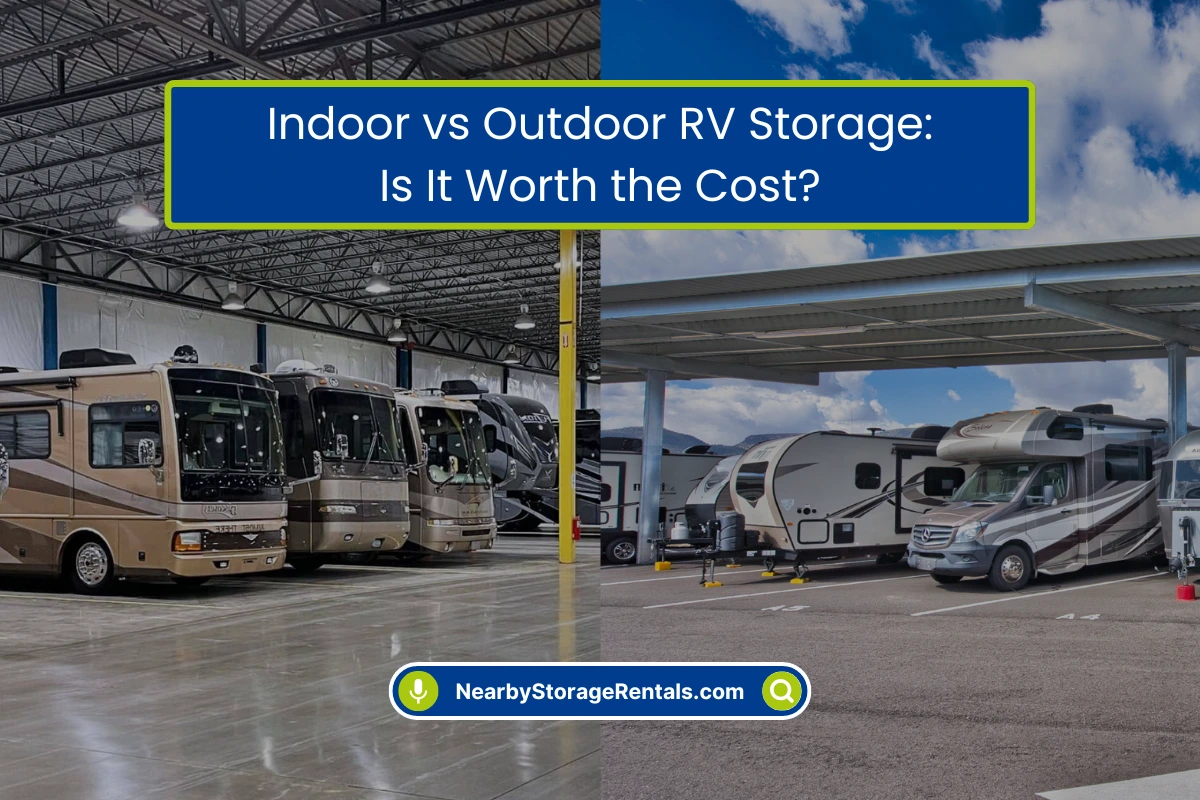
- Outdoor RV storage typically means parking your RV on an open lot. There may be fencing and lighting, but the RV is exposed to the weather.
- Indoor RV storage means your RV is parked inside a building or under a fully covered roof with walls around it. Some options also include climate control, especially in areas with extreme temperatures.
Both have value. The question is which one fits your budget and storage goals.
Cost differences you’ll notice first
Outdoor storage is almost always cheaper than indoor. If price is your top priority and the weather isn’t too rough where you live, outdoor options may fit your budget well.
Indoor storage usually costs more because you are paying for the roof, walls, and extra protection. The facility also invests more in buildings, lighting, and security, and those costs get passed on to you.
The choice isn’t simply “cheap versus expensive.” It’s about what you get for what you pay, and whether that added protection makes financial sense.
Weather protection and longevity
This is where indoor storage often shines.
Outdoor storage exposes your RV to sunshine, rain, snow, hail, ice, and temperature swings. Over time, that exposure can fade paint, crack seals, damage rubber components, and accelerate wear on tires and awnings. If you plan to keep your RV long term, or if it has custom finishes or leather interiors, that weather exposure adds up.
Indoor storage, especially with climate control, protects your RV from temperature extremes and climate damage. That protection often pays off in lower maintenance costs and better long‑term condition.
If you plan to store your RV for many months or years, the added cost of indoor space often offsets repair bills you’ll pay down the road.
Security and peace of mind
Security is not something people always think about until something goes wrong.
Outdoor storage yards may have fences, gates, and cameras, but your RV is still exposed. Thieves or vandals have easier access than when the RV is inside a building.
Indoor storage facilities often include gated access, cameras, and sometimes on‑site staff. Your RV sits inside a building, out of sight and harder to tamper with. For many owners, that extra protection is worth the money.
If your RV has valuables inside or is new and expensive, indoor storage adds peace of mind you won’t get from an open lot.
Maintenance costs over time
The real cost of storage isn’t just the monthly price tag. It’s what you spend on preservation because of how the RV was stored.
Under outdoor conditions, you may find yourself:
- Replace cracked seals around windows and doors.
- Repairing faded finishes and oxidized paint.
- Replacing tires more often due to sun damage.
- Cleaning mold or mildew from moisture buildup.
Indoor storage reduces those issues significantly. The RV stays cleaner, drier, and less stressed by the weather. That can lower your preservation cost over time, especially if you store your RV for several seasons.
Climate control matters
Not all indoor storage is the same. Climate‑controlled storage is a step above standard indoor storage. It keeps temperatures and humidity in a moderate range, which helps protect:
- Leather seats and upholstery.
- Electronics.
- Wooden cabinets.
- Seals and rubber trims.
If you live in a region with hot summers or freezing winters, climate control may be worth the extra cost, even compared to standard indoor storage.
How often do you use your RV
If you use your RV frequently, an indoor storage facility may make more sense. Loading and unloading gear, cleaning, and prepping the RV in a protected environment is easier than doing it in the rain or snow.
For weekend warriors and frequent travelers, indoor storage is not just protection. It’s convenient.
If you only use your RV once or twice a year and are fine doing cleanup on the day of travel, outdoor storage might be enough.
Location matters
Storage pricing varies a lot by region. In high‑demand areas with limited space, outdoor and indoor storage costs can both be higher than average. Sometimes indoor storage isn’t as big a price jump as you might expect.
In quieter or rural areas, outdoor storage can be dramatically cheaper, and indoor might feel expensive without offering huge benefits if the weather is mild.
Think about your own climate and local rates before leaning one way or the other.
Value vs. budget
Choosing indoor vs. outdoor isn’t just about money in the bank today. It’s about how much value you place on convenience, protection, and long‑term condition.
Outdoor storage is fine if:
- Your budget is tight.
- Your humidity is mild.
- You use the RV infrequently.
- You don’t mind washing and prepping your RV each season.
Indoor storage is worth the cost if:
- You want temperature protection.
- You are storing long-term.
- You want security and peace of mind.
- You use your RV regularly or have valuable equipment inside.
Both options have a place, but one may make more sense for you depending on how you plan to use and protect your RV.
Final thoughts
There is no single “right” answer for everyone. What’s worth the extra cost depends on your priorities, your climate, and how long you plan to store your RV.
Indoor storage offers better protection, security, and potentially lower maintenance expenses over time. Outdoor storage saves money up front and can work well if your rig doesn’t need that extra safeguarding.
Understanding what matters most to you and balancing price with protection helps you choose wisely, protect your investment, and enjoy your RV for years to come.


0 Comments