
Quick Summary
RV storage costs in 2026 typically range from about $30 to $125 per month for outdoor parking, $50 to $250 for covered storage, and $100 to $450 or more for indoor or enclosed spaces. Premium climate-controlled storage can cost $450+ depending on the RV, location, and demand. Your price will also depend on RV size, local land costs, seasonal demand, and extra fees such as insurance, deposits, setup charges, or access fees. Comparing facilities, choosing the right protection level, and asking about long-term or seasonal discounts can help lower your total cost.
If you own an RV and need a safe place to park it when you’re not on the road, storage is one of the first line items in your budget. RV storage costs vary widely in 2026, but understanding the real price ranges and what drives them helps you choose the right option without overpaying.
Typical Monthly Prices in 2026
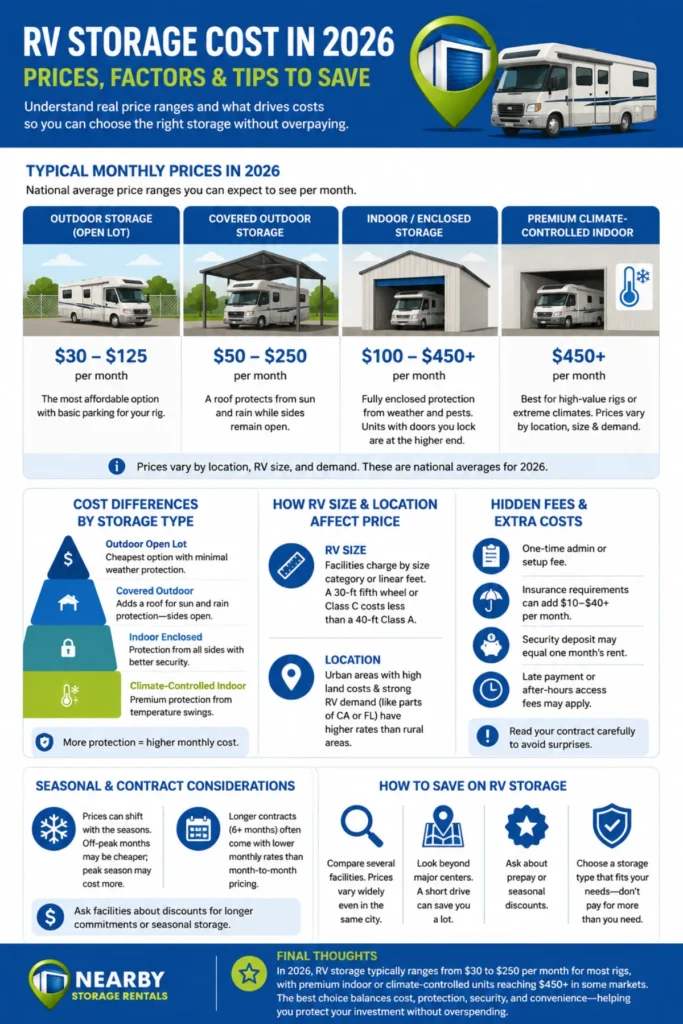
RV storage prices differ a lot based on the type of space you choose. Across the country in 2026, these are the common ranges you’ll see per month:
- Outdoor storage (open lot): around $30 to $125 on average. This is the most affordable type with a basic parking space for your rig.
- Covered outdoor storage: roughly $50 to $250 monthly. A simple roof over your RV protects from the sun and rain, but the sides are open.
- Indoor or enclosed storage: typically $100 to $450+. Fully enclosed buildings provide better protection from weather and pests, and units with doors you lock are the higher end of this range.
- Premium climate‑controlled indoor: prices can go toward $450 or more, depending on location, size, and demand. These units are best for high‑value rigs or climates with extreme temperatures.
These price ranges are national averages. Your exact rate will depend on where you live, the size of your RV, and the kind of protection you want.
Cost Differences by Storage Type
It helps to think of RV storage options like a tiered scale:
- An outdoor open lot is the cheapest but offers minimal weather protection. Great for budget long term storage or short seasons.
- Covered outdoor adds a roof – ideal if you live where sun and rain are concerns, but you don’t need a full enclosure.
- Indoor enclosed units protect from all sides and often include better security. These are popular in cold or wet climates.
- Climate‑controlled indoor units are a premium option, especially valuable if your RV has leather interiors, electronics, or custom finishes that you want to protect from temperature swings.
Think of storage types like protection layers: more protection usually means a higher monthly cost.
How RV Size and Location Affect Price
Two of the biggest pricing factors are RV size and where you live.
Most facilities charge by size categories or by linear feet. A 30‑foot fifth wheel or Class C camper typically costs less than a 40‑foot Class A. Larger rigs take more space and drive up the monthly bill.
Location matters a ton, too. Urban areas with high land costs and strong RV demand, like parts of California or Florida, tend to have higher storage rates than rural areas outside major cities.
Hidden Fees and Extra Costs to Know
The monthly rate is only part of the cost. Before signing a contract, ask about common extra charges:
- Some facilities charge a one‑time admin or setup fee when you start your rental.
- Insurance requirements can add $10–$40 or more per month if you don’t already have RV coverage.
- Some places require a security deposit equal to one month’s rent.
- Late payment or after‑hours access fees may apply depending on the facility’s rules.
Always read the contract carefully so you aren’t surprised by extra charges.
Seasonal and Contract Considerations
RV storage san diego pricing can shift with the seasons. In areas with cold winters, off‑peak months may have lower rates. In snowbird states where people leave for the summer, prices may swell in peak season.
Signing a longer contract, for six months or a year, sometimes gets you a lower monthly rate than month‑to‑month pricing. Ask facilities about discounts for longer commitments.
How to Save on RV Storage
Here are a few practical tips to keep your costs down:
- Compare several facilities before choosing. Prices can vary significantly even within the same city.
- Consider facilities a bit farther from major centers. A short drive might save you a big chunk of money.
- Ask about prepay or seasonal discounts for storing your RV longer.
- Choose a storage type that matches your needs. Paying for an indoor storage facility on an older travel trailer you use frequently might not be worth it.
Final Thoughts
RV storage cost in 2026 vary from budget‑friendly outdoor lots to higher‑end indoor spaces. Budget for roughly $30 to $250 per month for most rigs, with premium indoor or climate‑controlled units topping the scale around $450 and up in some markets.
The best choice balances cost, protection, security, and convenience based on how often you use your RV, where you live, and how long you plan to store it. Shopping around and understanding pricing factors helps you protect your investment without overspending.









0 Comments