
Quick Summary
Seasonal furniture damage usually comes from three things: sunlight, temperature changes, and humidity. Protect furniture by using UV window film, rotating pieces, conditioning leather, keeping indoor humidity around 40% to 60%, and leaving space for air circulation. Breathable cotton sheets work better than plastic covers, while pallets or 2x4s help protect furniture in climate-controlled storage. If your basement is damp, attic is extremely hot, or your home is overcrowded, a climate-controlled storage unit can prevent costly cracks, fading, warping, mildew, and rust.
Let me tell you about the time I murdered a $2,000 leather sofa. It was my first “real adult” purchase – top-grain Italian leather, the kind that feels like butter. I positioned it proudly by the living room windows where the afternoon sun poured in. We also have a helpful guide on storing a retractable awning.
Big mistake.
By summer’s end, the leather looked like alligator skin – cracked, faded, and about 20 years older than it actually was. The repair guy took one look and said, “Yeah… this is why we tell people not to do that.”
That was my wake-up call. Since then, I’ve become weirdly obsessed with protecting furniture from seasonal damage. Here’s everything I’ve learned the hard way.
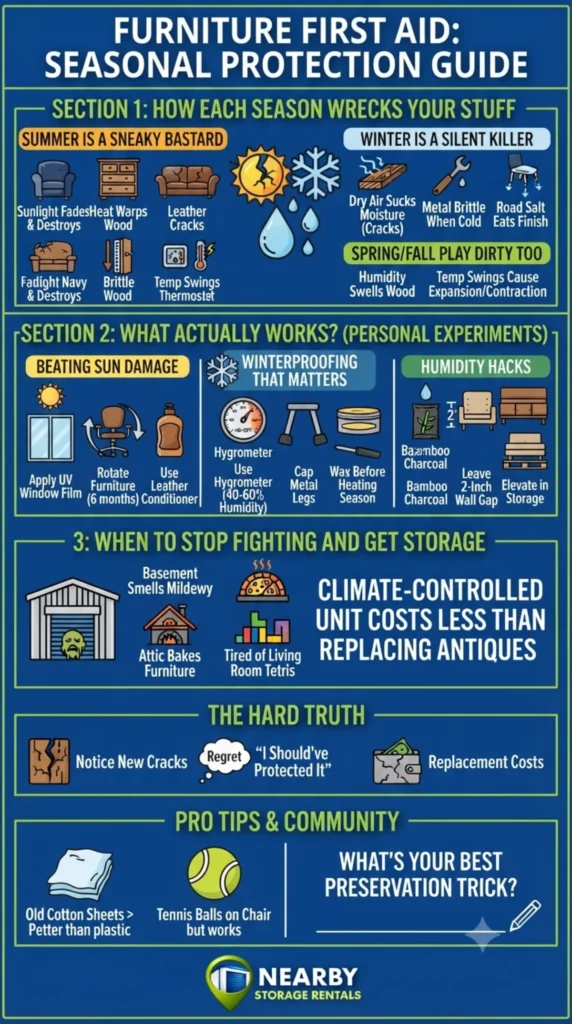
How Each Season Wrecks Your Stuff?
Summer is a Sneaky Bastard
- Sunlight doesn’t just fade colors – it destroys them
My navy blue armchair is now permanently two-toned because I didn’t rotate it. - Heat makes wood move more than my ex’s moods
My solid oak dresser drawers either won’t open in August or rattle like maracas in December. - Leather cracks without warning
Conditioner isn’t optional – it’s CPR for your couch.
Winter is a Silent Killer
- Dry air sucks moisture from wood faster than my Dyson
Those cracks in your tabletop? That’s winter’s handiwork. - Metal gets brittle when cold
I snapped a drawer pull clean off last January like it was made of crackers. - Salt is furniture poison
Those white rings on chair legs? Road salt eating through the finish.
Spring/Fall Play Dirty Too
- Humidity swells wood like a sponge
Ever tried opening a kitchen cabinet after a week of rain? Exactly. - Temperature swings cause more drama than reality TV
Constant expanding/contracting leads to cracks and splits.
What Actually Works? (From My Personal Experiments)
Beating Sun Damage
- UV window film saved my sanity
$20 on Amazon prevented more fading than my expensive curtains ever did. - Rotate furniture like tires
That sun-bleached side? Make it face the wall for six months. - Leather conditioner is non-negotiable
Skip it and watch your couch age faster than a U.S. President.
Winterproofing That Matters
- $15 hygrometer = wood’s best friend
Keep humidity between 40-60% or watch your furniture crack. - Rubber caps on metal legs
I cut up an old bike tube – not pretty but neither is rust. - Wax before heating season
Think of it as chapstick for your dining table.
Humidity Hacks That Don’t Suck
- Bamboo charcoal > silica packets
Toss some in drawers – they absorb moisture and can be “recharged” in sunlight. - Leave breathing room behind furniture
That 2-inch gap prevents condensation and mold. - Elevate everything in climate control storage
Pallets or 2x4s keep air circulating underneath.
When to Stop Fighting and Get Storage?
Let’s be real – sometimes your house just can’t protect your stuff:
- When your basement smells like a locker room.
- When your attic bakes like a pizza oven.
- When you’re tired of playing furniture Tetris in your living room.
A proper climate-controlled storage unit costs less than replacing water-warped antiques. I learned this after ruining my grandma’s cedar chest – that mildew smell never really comes out.
Frequently Asked Questions
Q1. How can I protect furniture from seasonal damage?
Clean and dry furniture, use suitable covers and choose climate options that reduce humidity and heat swings across seasons.
Avoid airtight damp wraps.
Nearby Storage Rentals recommends matching protection to wood, upholstery and finishes rather than assuming any indoor unit equalizes every season.
Q2. Does summer heat harm wooden furniture in storage?
Heat and dryness or humidity swings can stress wood finishes and joints over time.
Climate control can help.
We recommend stable conditions for solid wood pieces instead of leaving them in untreated spaces through peak summer months when practical carefully.
Q3. Should upholstered furniture be wrapped for winter storage?
Upholstery should be clean and dry before covering; breathable protection often suits longer storage better than trapping moisture.
Pad corners.
Nearby Storage Rentals suggests avoiding damp plastic seals on sofas and chairs that can encourage odors or mildew in cold damp seasons.
Q4. Can seasonal humidity crack furniture finishes?
Humidity swings can contribute to finish and joint stress, especially when pieces were not acclimated or packed dry.
Monitor conditions.
We recommend climate-aware storage and periodic checks rather than ignoring early signs of warping until move-out day carefully as needed.
Q5. How should I elevate furniture during wet seasons?
Keep furniture off damp floors with pallets or risers where allowed, and avoid exterior wall contact when practical.
Report leaks.
Nearby Storage Rentals recommends moisture-aware placement during rainy months instead of resting unfinished wood feet directly on concrete carefully as needed.
Q6. Do leather sofas need special seasonal storage care?
Leather needs clean dry conditions and appropriate covers; extreme dryness or humidity can cause problems.
Condition per care guidance when suitable.
We recommend climate-aware units for leather furniture rather than untreated spaces through harsh seasonal swings carefully as needed when practical.
Q7. Should I disassemble furniture before seasonal storage?
Disassembly can protect joints and save space when done carefully with labeled hardware bags.
Not every piece needs it.
Nearby Storage Rentals suggests disassembling when transport or unit fit requires it, rather than forcing fully assembled items into damaging positions.
Q8. How often should I inspect furniture across seasons?
Inspect at season changes for odors, pests, moisture and cover damage.
Adjust packing if needed.
We recommend calendar reminders aligned with local weather shifts instead of a single glance at move-in and another at move-out years later carefully as needed.
The Hard Truth
Your furniture is in a constant battle against the elements. A little effort now saves you from:
- That sinking feeling when you notice new cracks.
- The regret of “I should’ve protected it better”.
- The wallet pain of replacement costs.
And if you need somewhere to stash seasonal pieces? Well, let’s just say I’ve become a long term storage unit evangelist after one too many furniture funerals.
Pro Tip: Old cotton sheets make better furniture covers than plastic – they breathe better and don’t make your home look like a meth lab.
What’s your best furniture preservation trick? Mine’s using tennis balls on chair legs – not classy, but neither are scratched hardwood floors.










0 Comments