
Quick Summary
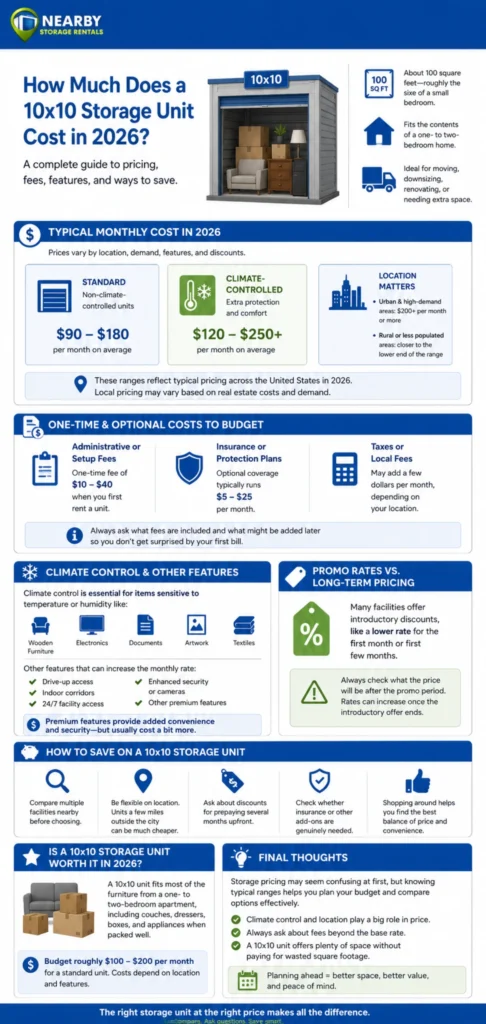
A 10×10 storage unit typically costs about $90 to $180 per month for a standard unit in 2026, while climate-controlled units usually run $120 to $250 or more. Location, security, access, and other features can raise the price, and you may also pay $10 to $40 in setup fees plus insurance or local taxes. A 10×10 unit provides about 100 square feet and can usually hold furniture and boxes from a one- or two-bedroom home. Comparing nearby facilities and checking promotional rates and long-term pricing can help lower your total cost.
Renting a 10×10 storage unit is one of the most common choices when people are moving, downsizing, renovating, or just need extra space. It’s about 100 square feet of space, roughly the size of a small bedroom, and can usually hold furniture and boxes from a one‑ or two‑bedroom home.
But how much does it actually cost in 2026? Pricing isn’t one fixed number because it depends on several factors like location, climate control, security features, and whether there are introductory discounts.
Typical Monthly Cost in 2026
Here’s a practical range to keep in mind:
- Standard non‑climate‑controlled units: approximately $90 to $180 per month on average in 2026.
- Climate‑controlled units: usually $120 to $250+ per month because of the extra protection they offer, which also affects how much does a 10×10 storage unit cost per month in premium facilities.
- In urban centers or high‑demand cities, prices can be higher, sometimes pushing past $200 per month or more.
- In less populated or rural areas, you can often find deals closer to the lower end of the range.
These ranges reflect typical pricing across the United States in 2026 and include common storage features. Local pricing might be slightly different based on real estate costs and demand.
One‑Time and Optional Costs to Budget
In addition to the monthly rent, here are a few other things you may see on your bill:
- Administrative or setup fees: Many facilities charge a one‑time fee of around $10 to $40 when you first rent a unit.
- Insurance or protection plans: Optional coverage often runs around $5 to $25 per month, depending on the provider and coverage level.
- Taxes or local fees: These can add a few dollars per month, depending on where the unit is located.
Always ask the facility what fees are included and what might be added later, so you don’t get surprised by your first bill.
Climate Control and Other Features
Climate control can matter a lot if you plan to store items sensitive to temperature or humidity—like wooden furniture, electronics, documents, artwork, or textiles. Facilities that offer this feature typically charge more, reflecting the cost of temperature regulation and extra protections.
Other features that affect price include:
- Drive‑up access.
- Indoor corridors.
- 24/7 facility access.
- Enhanced security or cameras.
Any “premium” features usually bump up the monthly rate a bit.
Promo Rates vs. Long‑Term Pricing
Many storage facilities advertise promotional pricing. For example, they may offer a lower rate for the first month or first few months. That can be nice, but it’s important to check what the price will be afterward. Some renters find that their monthly cost increases after the introductory period.
How to Save on a 10×10 Storage Unit
If cost is a concern, here are a few practical tips:
- Compare multiple facilities nearby before choosing.
- Be flexible on location. Units even a few miles outside a city center can be much cheaper.
- Ask if there are discounts for prepaying several months upfront.
- Check whether insurance or other add‑ons are genuinely needed.
Shopping around helps you find a good balance between price and convenience.
Is a 10×10 Storage Unit Worth It in 2026?
A 10×10 unit fits most of the furniture from a one‑ to two‑bedroom apartment, including couches, dressers, boxes, and appliances when packed well. It’s often the most practical unit size for moving or temporary storage needs. 10×10 storage unit prices can vary depending on location and features, but they play a key role in choosing the right option.
The cost you pay depends a lot on where you live and what features you want, but budgeting roughly $100 to $200 per month for a standard unit is a good starting point for most people in 2026.
Final Thoughts
Storage pricing may seem confusing at first, but knowing typical ranges helps you plan your budget and compare options effectively, including common questions like how much is a 10×10 storage unit. Keep in mind that climate control and location play a big role, and always ask about fees beyond the base rate so you know what you’re committing to.
If you’re moving soon or need temporary space while you settle into a new place, a 10×10 unit is often a smart choice that offers plenty of room without paying for wasted space.










0 Comments